Psychology of why people dislike AI
Why is it that some people dislike, fear, and even hate AI, and generally have an anti-AI sentiment? Looking into the psychology, personality traits, and motivations that contribute to an aversion to artificial intelligence.
Psychology of why people dislike AI
Fear and cynicism toward AI are deeply rooted in human psychology. They’re not just reactions to technology, but manifestations of several fundamental psychological mechanisms that have existed for centuries whenever society faces major disruptive change.
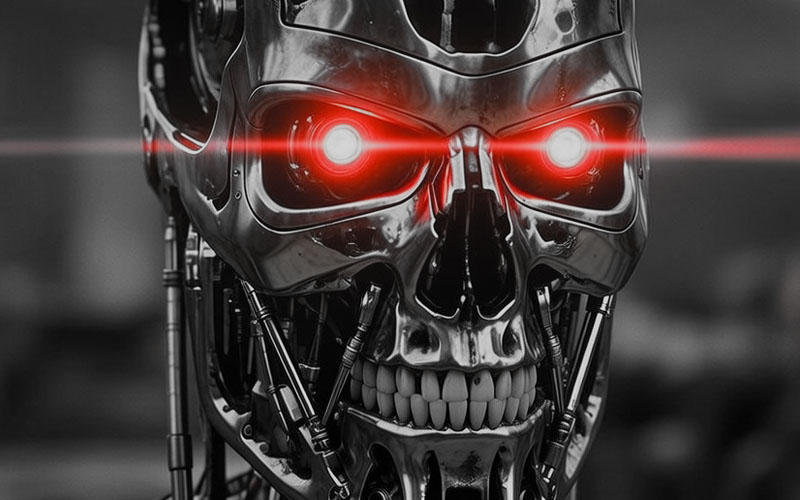
You could say that AI has also mostly been demonised in the entertainment media. Movies such as Terminator and the Matrix movies have likely contributed to people’s fear and dislike when it comes to AI and the potential negative outcomes, such as human annihilation. However, if someone is basing their predictions on the Terminator movies, they shouldn’t be taken too seriously in my opinion.
Here are the main psychological reasons, drawn from research on technophobia, existential anxiety, status threats, and identity dynamics.
Fear of the unknown
Humans have an evolved, fundamental aversion to uncertainty. Psychologists call this the “fear of the unknown”, sometimes described as a core fear underlying many anxieties.
Modern AI systems are often opaque, not clearly obvious or visible, and even developers don’t fully understand how they arrive at certain decisions. This triggers uncertainty intolerance, leading to dread about unpredictable outcomes, from minor errors to catastrophic outcomes.
Threat to human uniqueness
AI directly challenges what it means to be human. When machines outperform us in domains we consider quintessentially human (creativity, reasoning, empathy, art, writing), it can provoke existential dread, a sense of meaninglessness, emptiness, or obsolescence.
Fear of becoming obsolete
Many people’s sense of self-worth, identity, and social status are tied to their job, skills, and productivity.
AI threatens this by potentially displacing roles. Even if mass unemployment hasn’t materialized yet, the perceived threat is psychologically real. This creates status anxiety, learned helplessness, shame, and increased risk of suffering an identity crisis.
Personality traits that contribute to a dislike of AI
Certain personality traits can predict those who dislike or fear AI.
Extroverts thrive from the energy of other people. So, they will put great importance on people over technology.
Agreeableness
Those high in agreeableness have a strong interest in people and relationships. They often lead with emotion and compassion. Someone like this will not naturally take to perceptually cold, emotionally void artificial intelligence.
Openness
People low in openness are more likely to value tradition, and dislike progression and change. Some people with high openness who are very creative may also dislike AI because it threatens their creativity.
Neuroticism
High neuroticism individuals, combined with some of the above traits, are more sensitive to anxiety, and generally negative emotions.
Summary
AI is basically a threat to the ego, including a fragile sense of meaning and uniqueness. Our need for control and status. Our discomfort with uncertainty and rapid change. Our deep-seated fear that we might become irrelevant in a story we no longer dominate.