Selective Morality | Why people support certain causes?
Selective morality and outrage. Why is it that some people are very selective about the causes and issues that they support and care about?
Selective morality or outrage & definition?
It’s the phenomenon where people passionately support or condemn certain causes, injustices, or moral violations while ignoring or downplaying similar or even worse ones.
Why does selective morality and outrage occur?
Usually it will not be deliberate hypocrisy in the malicious sense. Instead, mostly, it emerges from deep, often unconscious psychological and social mechanisms that shape how humans process morality, emotions, and group dynamics.
Virtue Signalling, Status, and Emotional Reward.
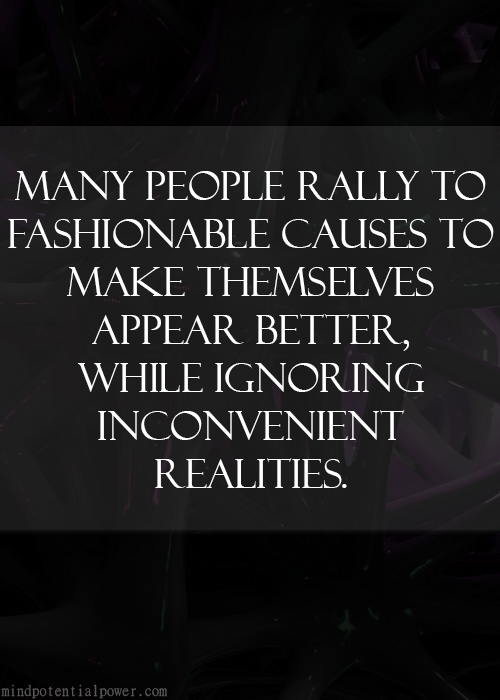
Expressing outrage often feels good, it boosts self-image as morally superior, elevates social status (“I’m one of the good ones”), and provides a dopamine-like reward through affiliation or signalling virtue. Moral outrage can be directed like fashion. Supporting a fashionable cause can increase social status and moral standing.
This makes people more likely to display outrage selectively when it enhances self-image or group belonging, rather than purely for justice. Moral outrage can also defend against threats to our own moral identity. Condemning others buffers and hides personal moral shortcomings.
Narcissists are much more likely to engage in virtue signalling in order to attain social status. They care greatly about their image.
Confirmation Bias and Motivated Reasoning
People seek, interpret, and remember information that aligns with pre-existing beliefs or identities (confirmation bias). When a cause fits our worldview or threatens our group, it gets amplified; contradictory examples get filtered out or downplayed. This leads to selective attention to certain injustices. Motivated reasoning further explains why we bend moral logic to protect self-image or group status. Outrage feels justified only when it supports what we already value or believe.
Indoctrination & Ignorance
Due to far left-wing anti-western narratives being pushed on by people in universities and in the media, many people’s views have clearly been influenced by certain narratives and propaganda. This naturally leads to ignorance, as only very limited things are being taught or told that support certain narratives.
For example, teaching students about the negative aspects of the British Empire, without teaching about the good. Plus, the whole world history of empires. It’s the absence of critical thinking.

Assumptions, Judgements & Non-Thinking
Certain assumptions and judgements seem to be made about the reality of things. For example, believing automatically that a more powerful country is the oppressor, and the weaker country is always the victim. This is the same as when a woman is automatically believed in domestic abuse cases. Women are usually the victim when it comes to domestic abuse. However, there are always exceptions.
Tribalism, Group Identity, and Ingroup Bias
Humans are wired for strong group loyalties (often called tribalism or ingroup favouritism). We apply moral standards more leniently to our own group (political, cultural, religious, national, etc.) and more harshly to outgroups. Violations by “us” feel less outrageous or get rationalized, while the same acts by “them” trigger intense moral indignation.
This creates double standards without people consciously noticing. This ties into moral hypocrisy studies showing we judge ingroup members more fairly than outgroup ones, even in unrelated contexts.
Moral Foundations and Differing Priorities
According to moral foundations theory (and related critiques), people weigh moral concerns differently; harm/care, fairness, loyalty, authority, purity, etc. What one person sees as a grave violation (e.g., harm to an innocent) might not register strongly for someone whose primary foundations are loyalty or authority.
Outrage becomes selective because triggers align unevenly with personal moral “taste buds.” Even when foundations overlap, the intensity of response varies based on perceived threats to core values.
Limited Resources and Practical Prioritization (Including Outrage Fatigue)
We have finite emotional energy, attention, and time. Selective outrage can be adaptive; focusing on “enforceable” or community-recognized norms helps coordinate collective action more efficiently than trying to react to every injustice equally.
Research even defends a form of selective outrage as collectively prudent for norm enforcement. Constant global awareness (via media/social platforms) leads to outrage fatigue, so people often conserve outrage for issues closer to home, identity, or perceived solvability.
In short, selective morality and outrage happen because human morality isn’t a consistent, impartial calculator, it’s shaped by evolution, emotions, groups, cognition, and environment to help us survive socially. Most people aren’t aware of these filters; they genuinely feel the outrage is objective and the inconsistencies are justified (or invisible).
Recognizing these drivers doesn’t excuse uneven standards, but it explains why they’re so common and hard to eliminate. Greater self-awareness, exposure to diverse perspectives, and deliberate efforts to apply principles consistently can reduce (though probably never fully erase) the selectivity.